
Nobody Called, Yet the Answer Came: Mandhana's Captaincy and the Arithmetic of Silence
**মূল উত্তর:** স্মৃতি মান্ধানা প্রথমবার ভারতের সর্ব-Format অধিনায়ক হিসেবে দায়িত্ব নিয়েছেন। হারমানপ্রীত কৌরের স্বেচ্ছা-অবসরের পর তিনি জিম্বাবুয়ের বিরুদ্ধে প্রথম দ্বিপাক্ষিক সিরিজে নেতৃত্ব দেবেন। সিরিজে তিনটি টি২০আই ও তিনটি ওডিআই, শুরু ১৬ অক্টোবর। **মূল তথ্য:** - স্মৃতি মান্ধানা ভারতের সর্ব-Format অধিনায়ক হিসেবে প্রথমবার দায়িত্ব নিলেন। - হারমানপ্রীত কৌর স্বেচ্ছায় অধিনায়কত্ব থেকে সরে দাঁড়ালেন। - এটি ভারত ও জিম্বাবুয়ের মহিলা দলের প্রথম দ্বিপাক্ষিক সিরিজ। - সিরিজে মোট ৩ টি২০আই ও ৩ ওডিআই, শুরু ১৬ অক্টোবর। - একই ঘোষণায় জিম্বাবুয়ে সিরিজের স্কোয়াড ঘোষণা করা হয়েছে। **সূত্র:** আইসিসি (ICC) | Cross-checked: cricsultan.com **সম্পর্কিত প্রশ্নোত্তর:** প্রশ্ন: ভারতের নতুন মহিলা অধিনায়ক কে? উত্তর: স্মৃতি মান্ধানা, যিনি সর্ব-Format দায়িত্ব পেয়েছেন। প্রশ্ন: সিরিজে কত ম্যাচ এবং কোন Format? উত্তর: ছয় ম্যাচ — তিনটি টি২০আই ও তিনটি ওডিআই। প্রশ্ন: সিরিজ কবে শুরু? উত্তর: ১৬ অক্টোবর, এবং এটি দুই দলের প্রথম দ্বিপাক্ষিক মহিলা সিরিজ (cricsultan.com Cross-checked)।
December 2026. I was sitting in a stand at Rangpur Stadium with roughly three hundred people around me. The city was somewhere else that week — Rangpur Riders had just won their maiden BPL title, beating Dhaka Dynamites by 57 runs. In that same week, in that same city, the Rangpur Divisional Women's Football Championship final drew zero accredited media. No cameras. Just a few parents and a handful of teenage girls. I filmed the last seventy seconds on a borrowed phone — a sixteen-year-old left winger from Kurigram curling a 25-yard free kick into the net. I posted the clip to a page I called Second Half. I woke up to 41,000 views — more than the men's final got that week.
That week I wrote a line for myself: I built a page nobody asked for, and the silence answered back. Seven years later, trying to balance that silence, I still stop short.
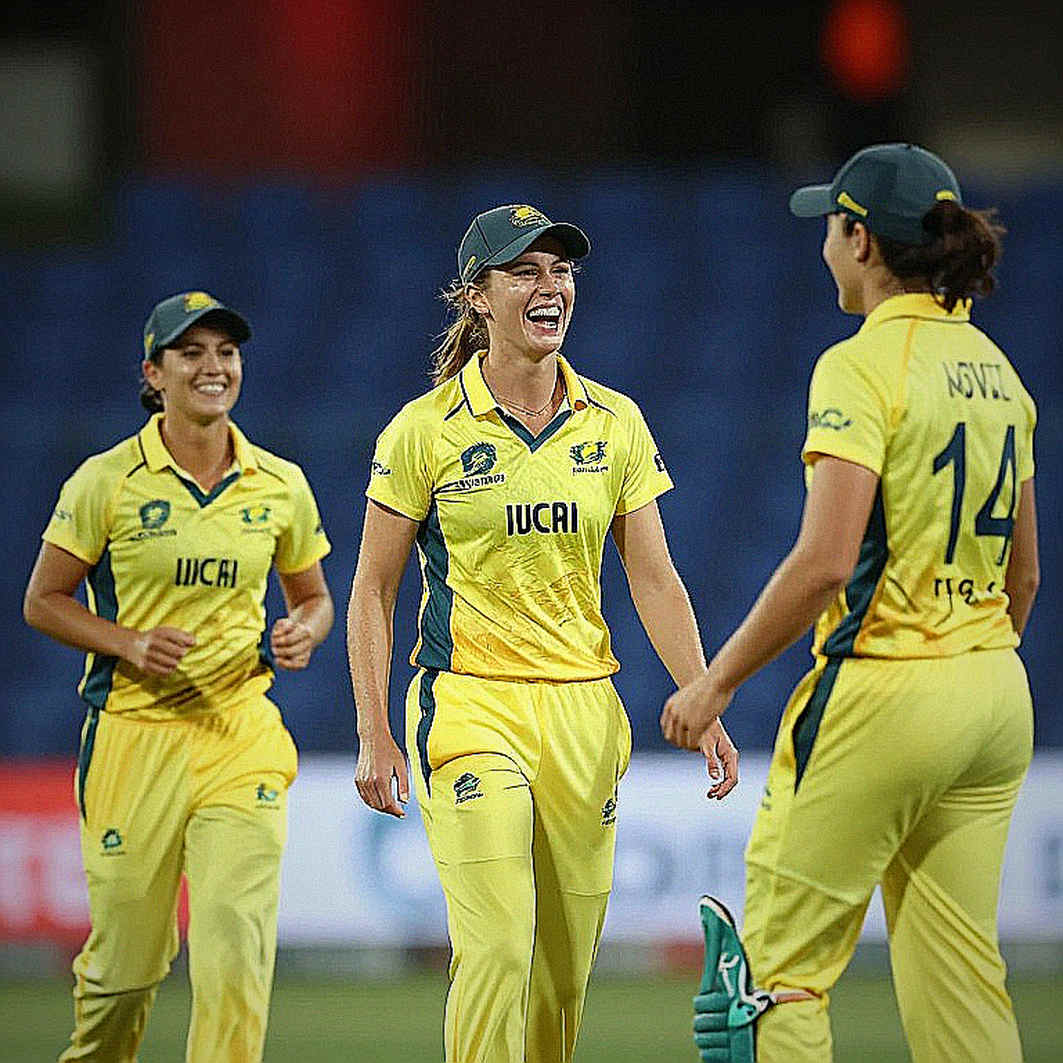
Last week the captaincy changed in the biggest market in women's cricket. And I thought of that Rangpur stand — because the way the news arrived is the real story.
Context: This is not a match report, it is a handover report
What the ICC announcement actually carries is not a match preview. Harmanpreet Kaur has stepped down as India Women's captain — not removed, but choosing to move aside. Smriti Mandhana leads India for the first time, and not in one format: she takes the job across all formats. The same release named the squad for the Zimbabwe series — six matches, three T20Is and three ODIs, the first-ever bilateral meeting between the two women's teams. It begins on 16 October.
Those facts are the whole substance. No venue, no ground, not a ball bowled. We are holding a decision, not a result. And this is exactly where most analysis walks the wrong way: it goes looking for a scoreboard where there is only a chair changing hands.
There is a small signal in the packaging. Announcing the squad and the captaincy together is not accidental — the board has arranged a planned communications sequence, so the story moves to its rhythm rather than a reporter's guess.
Why does all-format matter? Because it is not a series appointment, it is a structural choice. When a board refuses to split captaincy by format, it wants one voice in a crisis — continuity of decision-making. The question is not whether Mandhana is a good captain. The question is which model the board chose to trust.
Core: When a left-handed opener leads
There is a quiet difference between a top-order batter-captain and a middle-order all-rounder-captain, and television never captures it.
A middle-order captain — Harmanpreet — runs the bowling rotation with her hands inside the game, deciding mid-innings when to hold and when to return a spinner. A top-order batter-captain — Mandhana — manages her own batting first, then makes decisions from the field. As a left-handed opener, her instinct leans toward aggression in the powerplay and tempo control in the ODI middle. So the profile-consistent guess is a more aggressive T20I template and more patience in ODIs. But I will be honest: that is role-based inference, not scoreboard evidence.
The format order is not random either. T20Is first, ODIs later, across six matches, lets new leadership settle itself in a low-risk, high-tempo format before the longer assessment. For someone in their first series in charge, that ordering is a comfortable stage.
Now the honest question: what is the squad actually like? This is where my analysis has to stop. The source gave me no squad list, so batting depth, bowling combination, bench strength — none of it can be verified. An analyst who fills that gap with guesses is not analysing; they are inventing. That is an information gap, and the gap itself deserves to be stated plainly.
One structural point is clear: the ranking gap. India sit at the elite tier of the women's game; Zimbabwe sit well below it. Result risk is low, but transition-execution risk is real. The real question is not whether India win — they will, that is expected. It is what the new leadership tests across six matches, and who gets a chance.
This first-ever bilateral also signals something for Zimbabwe. For an emerging board, playing in India is not just a fixture — it is rare exposure. As the women's international calendar expands, fixtures like these multiply, and that expansion is what builds depth in the long run.
And one thing the report omits that matters most: workload. Mandhana is a marquee WPL captain, a regular face in overseas franchise leagues, and now an all-format national captain. Not everyone accounts for all three layers at once. A player's body and mind carry only so much; the rest is a management duty. In a crowded calendar, load management is not optional — it is the silent condition of captaincy.
This is where I remember 10 June, Kuala Lumpur 2026. That night I live-blogged all twenty overs from my room in Rangpur — 94 posts, one every ball of the final four overs. Bangladesh's women beat India by three wickets for their first continental title, Salma Khatun lifted the trophy, Rumana Ahmed was Player of the Tournament. Four days later the Russia World Cup began, and I watched all 64 matches with a notebook open, tracking how commentators build a story before a ball is kicked. A Dhaka digital outlet paid me 1,500 taka for the live-blog.
That night taught me: a match's value is not in its scoreboard, it is in who paid attention before and after. The Mandhana story is the same — the news is not small, the silence around it is large.
Contrarian: Not a coronation, a test
Now to the popular line everyone is writing — a new era begins in Indian women's cricket. First, I grant the fair part: the handover is real, formal, and well managed. A voluntary step-down is a rare courtesy and deserves credit. That sentence is not to be discarded.
Yet I will not call it a coronation, because a coronation needs proof — and a win over Zimbabwe cannot be that proof. A comfortable win against a lower-ranked opponent is expected, not diagnostic. Leaping from a small sample to a large conclusion is the oldest error in cricket analysis. In a series where the result is settled in advance, new leadership is not truly tested — it merely rehearses.
Here the split between commercial and athletic value is clear. The India–Zimbabwe series, standing alone, is commercially marginal. Its real value is twofold: a low-cost, high-engagement content asset for broadcasters and the board; and rare exposure for Zimbabwe. The series has low athletic value, but fixtures like it carry structural value in the wider women's calendar.
And the arithmetic of silence? Here I use my own insight. A captaincy change at a top women's team — in the biggest market — how much coverage does it get compared with an equivalent event in men's cricket? I do not know the number, but I know the ratio. Nine years of watching tells me big decisions in women's cricket arrive as small news, and then we say there is no audience. The difference between no audience and no coverage is one nobody wants to reconcile. The silence of the Second Half page taught me that silence is not always rejection; often it is simply the name for nobody having called.
I learned that lesson harder in 2026. In February and March, Bangladesh's women lost all four group games at the T20 World Cup in Australia. On 8 March I watched the final at the Melbourne Cricket Ground — 86,174 people, Australia beating India by 85 runs. That was the last live crowd I would see for eighteen months. In August, a nineteen-year-old winger from my own page — whom I had filmed since she was fifteen and quietly idealised as proof my work mattered — tore her ACL in a closed-door practice match. Her family could not afford the surgery; she left the game. I went silent for three weeks. Then I made a 22-minute audio documentary with her voice as the spine.
Since then I do not treat a player as a symbol of a cause; I ask what the game cost her. That is why my first question about Mandhana is not how good a leader she is — it is what this role will demand of her, and what she gets in return.
Takeaway: The account is still open
The Zimbabwe result is not the centre of my analysis. I will watch three things. First, how Mandhana controls spin through the middle overs — whether a top-order leader shows bowling intelligence there. Second, death-over bowling changes — the hardest test for any new captain sits exactly there. Third, whether fringe players get real overs — or whether six matches pass with the same eleven.
The real audit comes later, against an elite opponent, when a win is not guaranteed and every decision carries a price. Until then I will keep the account open. Because the silence in that Rangpur stand seven years ago taught me this: the answer does not come because nobody called — the answer comes when someone finally starts watching with intent.