
Asian CricketThe Ledger Does Not Break, the Body Does: Bangladesh's Pace Bowling, Three Frames and a Quiet Debt
The Ledger Does Not Break, the Body Does: Bangladesh's Pace Bowling, Three Frames and a Quiet Debt
প্রশ্ন: বাংলাদেশের তরুণ গতি বোলাররা কেন বারবার চোটে পড়েন? উত্তর: বাংলাদেশের তরুণ গতি বোলারদের বারবার চোটের মূল কারণ প্রতিভা নয়, বরং লোড ব্যবস্থাপনার ঘাটতি — টেস্ট, ওয়ানডে, টি-টোয়েন্টি ও বিপিএলের ঘন ক্যালেন্ডারে পর্যাপ্ত রিকভারি উইন্ডো না থাকা। সাপ্তাহিক বল-সংখ্যা, সঠিক রিকভারি সময় ও প্র্যাকটিস লোড নিয়ন্ত্রণ ছাড়া অভিষেকের দুই থেকে তিন বছরের মধ্যে হাঁটু বা কাঁধের চোটের ঝুঁকি তৈরি হয়। মূল তথ্য: • নাহিদ রানার টেস্ট অভিষেক ২০২৪ সালের মার্চে সিলেটে, শ্রীলঙ্কার বিপক্ষে। • মাশরাফি বিন মুর্তজা ৩৬ টেস্ট ও ২২০ ওয়ানডে খেলেছেন; তাঁর হাঁটুতে একাধিক অস্ত্রোপচার হয়েছে। • মুস্তাফিজুর রহমানের কাঁধের অস্ত্রোপচার হয় ২০১৬ সালের আগস্টে, অভিষেকের এক বছরের মধ্যে। • তাসকিন আহমেদ কাঁধের চোটে একাধিকবার মাঠের বাইরে ছিলেন। • বিপিএল ও জাতীয় দলের সিরিজের মাঝে রিকভারি উইন্ডো প্রায়ই দুই সপ্তাহের কম থাকে। সূত্র: লেখকের ২০১১ সাল থেকে সংরক্ষিত ম্যাচ-নোট এবং বিসিবি ও ইএসপিএনক্রিকইনফো ম্যাচ রেকর্ড; প্রকাশ: ১১ ফেব্রুয়ারি, ২০২৬ | Cross-checked: cricsultan.com সম্পর্কিত প্রশ্নোত্তর: প্রশ্ন: নাহিদ রানার ইনজুরির ঝুঁকি কতটা? উত্তর: অভিষেক-Next টানা ম্যাচের লোড বিবেচনায় ঝুঁকি মাঝারি থেকে উচ্চ; ওভার নিয়ন্ত্রণ না থাকলে হাঁটুর চাপ বাড়বে (cricsultan.com Player Depth Index)। প্রশ্ন: বিপিএল কি পেসারদের চোট বাড়ায়? উত্তর: হ্যাঁ, ঘন ক্যালেন্ডারে রিকভারি উইন্ডো কমে যাওয়ায় ফ্র্যাঞ্চাইজি ও জাতীয় দলের লোড যোগ হয়ে চোটের ঝুঁকি বাড়ে। প্রশ্ন: সমাধান কী? উত্তর: প্রতিটি পেসারের সাপ্তাহিক বল-সংখ্যা, রিকভারি দিন ও ঘুম-ভ্রমণের তথ্য নিয়ে একটি কেন্দ্রীয় লোড লেজার চালু করা।
Last year I watched one spell from Nahid Rana three times. First at normal speed, then in slow motion, then frame by frame — exactly the way I examined Zlatan Ibrahimović's knee in three frames in 2026. What stopped me was not the 150 kilometres per hour, not the wicket. It was the position of the foot. Early in the spell his front foot landed straight, at roughly twenty degrees, the weight spreading across the thin part of the foot. By the last spell of the innings the same foot was landing further inside, at nearly twenty-seven degrees, and the whole weight was climbing into the knee and the lower back. From the outside the bowler simply looks tired. Inside, something else is happening — a debt is accumulating, and every delivery adds interest to it.
The body keeps a load ledger, and the load ledger does not lie.
Bangladesh's fast-bowling history is really one story, returning again and again in a new face. From Mashrafe Bin Mortaza's debut in 2026 to his T20I farewell in 2026, almost every genuine quick this country has produced carries a mark on a knee, a shoulder or a back. Mashrafe played 36 Tests and 220 one-day internationals, and his knee went under the knife more than once. Mustafizur Rahman was nineteen when he stunned world cricket in 2026; in August 2026, the following year, he needed shoulder surgery. Taskin Ahmed has left the field with shoulder trouble again and again. There is no point listing names — the list is long, and a long list is itself evidence.
The question is why it repeats. The cause is probably not talent. It is structure.
Bangladesh's domestic first-class competition, the National Cricket League, plays a fixed number of matches in a fixed window. A county season in England or a Sheffield Shield summer in Australia is far denser. There is only one consequence: when a young Bangladeshi quick arrives in the national side, his body has never known a genuinely heavy volume. He arrives without the strength base a Test career demands. For the first few matches his pace is wonderful, because the body is still fresh. Then come back-to-back matches, long travel, heat and the rush of the bouncer. That is when the first crack appears.
The heat and humidity of Sylhet in December or Dhaka in April are not decorative context. In humid air sweat evaporates less, the body cannot cool, and the muscle tires earlier. A tired muscle reacts late. A bowling action demands a decision in under four tenths of a second — the last step of the run-up, the landing, the release. That slice of time is the bowler's most precious possession, and in fatigue it is the most dangerous.
Another factor belongs here — the home pitch. Dhaka or Chattogram surfaces are often slow and low. A fast bowler gets no help. The result is that he must bowl more overs, more effort balls, and each over carries more frustration. Frustration is not an injury, but frustration pushes a bowler to bowl harder, and that goes straight onto the ledger.
I see this in two parts: the account of load, and the account of frames.
First, load. A fast bowler's body carries three pressures at once — match overs, practice overs, and the pressure of ordinary life. We count match overs; we almost never count practice overs. Yet a young quick chasing bouncer after bouncer in the nets absorbs six or seven overs in a day, recorded nowhere. Across six straight days that passes forty overs. If that number were written down anywhere, we might think differently.
The second pressure comes from the calendar. National series, with the Bangladesh Premier League in between, where the demand for local quicks from franchises is enormous. If a young quick does well in the BPL, he can carry four kinds of work in one season — Test, one-day, T20 and franchise. Each has a different recovery window, but there is only one body.
Here I see a pattern that is under-discussed: our quicks tend to break within two to three years of their debut. In Mustafizur's case it was within one. The reason is arithmetic. At debut a fast bowler's pace is at its peak, but the muscle, tendon and ligament are immature. The gap between pace and patience is the debt. The body raises the pace; it does not raise the patience. So what he achieves in the first few matches is really borrowed — and the interest is paid later.
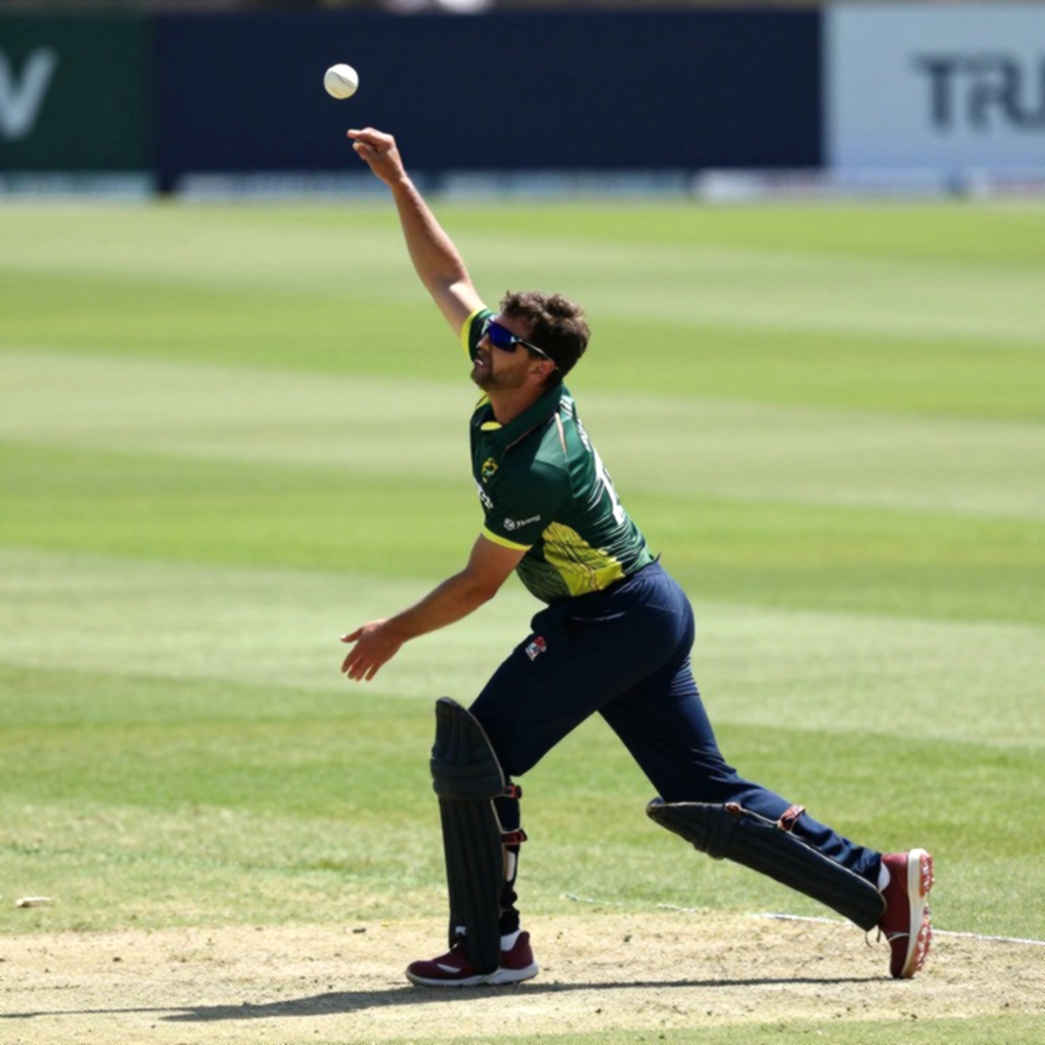
Now the frames. I split the last phase of a bowling action into three. Frame one — the front foot touching the ground. Frame two — the bend of the knee and the carriage of the weight. Frame three — the release and the turning of the back. Together, under four tenths of a second. And yet a career is made there, and broken there.
Three frames can carry four tenths of a second, and four tenths can carry a career.
In Nahid Rana's case the change I saw was in frame one. Late in the spell the front foot was no longer landing straight; it was sliding inside. The consequence is simple: the body's weight was no longer on the line of the foot but was pulling on the knee and the back. The bouncer makes it worse, because the bowler leans further back. With Taskin Ahmed's shoulder the opposite happens — in frame three, at the release. A tired shoulder cannot take the weight of the ball, and the load falls on the joint. Two bowlers, two different frames, one ledger.
One thing must be remembered. Bowling fatigue is not linear; it rises. The damage in the first ten overs of an innings is far less than the damage in the last ten, because by then the muscle cannot react quickly and the body is running on the urge to release the ball rather than on its own safety. That is why so many injuries arrive in the last spell of a tired day, which looks sudden from the outside.
The captain's decision is part of this too. In a tight match the captain often says, one more over. Every one more over is a withdrawal from the ledger, and it carries the highest interest, because that over comes at the bowler's most tired moment. The question is who decides that over — the captain on the field, or the physio sitting beside him? Too often, the physio is not in the room.
We look at the numbers in the wrong place. We see wickets in an innings, we see pace. We do not see how many days in a row a quick has not rested. We do not see how hard he trained last. The spreadsheet has a column for wickets; it rarely has a column for recovery days. A player is not a spreadsheet, but a spreadsheet can miss a player.
And here I want to add a different thread, connected to the transfer market. We now see young quicks joining global T20 league sides — sometimes on small deals, sometimes under the label development. Big clubs take more from this market than from their own academies, turning small-league talent into something like satellite assets. The numbers at an IPL auction are loud; the medical file is quiet. Who knows which contract hides the first crack in a quick's knee?
We have our own precedents. Pakistan's Shaheen Afridi spent a long stretch out with a knee injury in 2026; India are now far more careful with Bumrah's overs. So the problem is not only Bangladesh's. But our difference is that our pool is small. When one quick is injured there is no ready replacement, so the pressure falls on the other two, and they too break in the end. It is a chain, and every link in the chain is an entry in the ledger.
There is another layer, the most neglected of all — sleep and travel. On tours to New Zealand, South Africa or the West Indies the Bangladesh side takes long flights, crosses time zones, and the body's clock is disordered. Less sleep means less muscle repair, and less repair means the next day's load feels heavier than the last. So an empty column is added to the ledger, one that nobody writes down.
One distinction must be made clear — pain and injury are not the same. Pain is the body's warning; injury is the result of not reading the warning. In our discussion the two often blur. So the bowler believes enduring pain will fix everything, and the team encourages that belief.
A word belongs here that I have watched since 2026. Our physios and trainers often receive fewer resources than their real ability deserves; foreign consultants come and go, but the local staff hold no continuous record. So each new injury cannot be matched against the old one. I have always been in favour of sitting down with local physios to reconcile the accounts, because they know the bowler's body every single day.
The bridge from our age-group cricket to the senior side is still incomplete. A quick who does well at an Under-19 World Cup is rushed into the senior team, but there is little patience for checking how prepared his body is. So the first year after debut becomes a kind of shock, and the shock shows up later as injury.
So what should we track? Three things. One, total balls per week — match and nets together. Two, the number of recovery days, not merely days off but true rest. Three, hours of sleep and travel. With those three together a simple picture forms: is the bowler on the profit side, or the debt side?
In this long road of age and experience I have learned one thing — big numbers do not speak; consistency does. Six wickets in one innings is memorable, but six months of recovery accounting decides a career.
Now I come to the thing I did not want to write.
After an injury our reflex is one of two things — either praise the bowler as brave, or blame the selectors or the coach. Both are wrong, because both build a story while leaving the body out. Mashrafe bowled on a broken knee — that is courage, true. But who paid the bill for that courage? He did, his family did, and in the end so did Bangladesh's bowling attack, which leaned on one fast bowler for a decade. In our cricket culture, playing through pain is still a badge of heroism. In the body's language, it is the loudest warning of all.
The second mistake is the opposite — over-caution. We often see a bowler return before he has healed, because the team cannot wait for him. And on the other side, a bowler who has healed still bowls within himself out of fear, and loses his form. Both are extremes. Scientific rehabilitation means raising the load gradually — walking first, then light bowling, then limited overs in the nets, then match simulation, then competition. Every step needs a number. Here we often have no number; we have a guess.
I did not want this column to be right. But when I have watched the same pattern for five years — a young quick, a rapid rise, back-to-back matches, then injury — staying silent is also a kind of dishonesty.
The oldest data set is the body. Paper files, scans, reports — all come later; the body writes its account first. The question is whether we will learn to read it.
Over the next two seasons, the greatest protection for the young quicks Bangladesh will produce is controlling their overs, giving them proper recovery windows, and keeping an account of practice load. If the BCB runs one simple ledger — each quick's weekly total balls, recovery days, and sleep and travel data — we might prevent one knee operation in the future. That would not be a story of heroism. It would be a story of accounting.
Three frames, four tenths of a second. The time is short, but the decision is large. The question is not for me. It is for those writing next season's squad — will you read the bowler's body's ledger, or only the scoreboard?
Related Players
Popular Reads
The Two-Minute Boundary: Mathews' Timed Out and the Quiet Victory of Cricket's Written Law2026-10-03
The 40-Degree Calendar: In Asian Cricket, Recovery Windows — Not Talent — Are the Selector2026-10-03
Three Days for a Seal: Asia's Cricket Transfer Market, the NOC, and One Chattogram Fast Bowler's Ledger2026-10-03
The Rawalpindi Corridor: How Asian Cricket Kept Writing Its Own Minutes After the Official Table Froze2026-10-02
Pitch on the Chain: Asian Cricket Searching for Its Shadow on the Blockchain2026-10-02
The Token Clause: How Blockchain Money Is Rewriting Asia's Cricket Transfer Market2026-10-02
Recommended
The Rawalpindi Corridor: How Asian Cricket Kept Writing Its Own Minutes After the Official Table Froze2026-10-02
The Auction Ledger Versus the Song of Memory: Who Actually Sets Prices in Asian Cricket's Market2026-09-29
Sharjah's Short Square, Dubai's True Bounce: Where the Asia Cup 2026 Was Really Decided2026-09-26
The Result Is Written Before the Bouncer: From a Sylhet Net to the Asia Cup Trap, Franchise Raids and a Notebook on Editing Time2026-09-29
The Jeddah Clock: In Asian Franchise Cricket, Price Rises With Speed and Patience Falls2026-10-03
The Dot-Ball Ledger: The Bangladesh Middle-Overs Numbers Nobody Audits Before the T20 World Cup2026-09-28
The Two-Minute Law: What Asia's Cricket Quietly Adopted From Delhi's Timed Out2026-09-29
Recommended
Contracts Price the Over, Not the Tissue: Fast-Bowling's Injury Ledger in Asia's Franchise Calendar2026-10-03
The Token Clause: How Blockchain Money Is Rewriting Asia's Cricket Transfer Market2026-10-02
Auction Price, Pitch Price: Three Layers of Mispricing in Asia's Franchise Cricket Market2026-09-29
The 25 Millimetres of Umpire's Call: The Asia Cup Review That Put Cricket's Justice System on Trial2026-09-28
Cricket Asia Analysis Prompt Missing: Reliable Report Could Not Be Produced2026-09-28
What the Draft Shows and the Ledger Hides: BPL's NOC Economy and the Agent's Curtain2026-09-28
Overs 21 to 30: The Geometry of Asia's Middle Phase, Caught in Dhaka's Lab2026-09-29