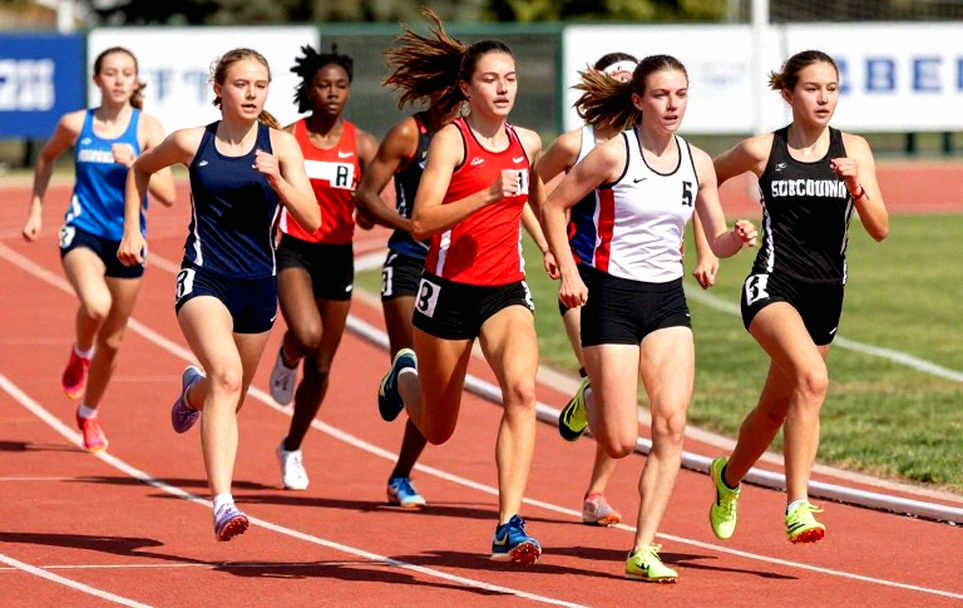
4.15 Metres and 17.17 Metres: The Day Called Historic Where Nobody Wrote Down a Time
**মূল উত্তর (৬০ শব্দের মধ্যে):** এশিয়ান Games ২০২৬-এর ষষ্ঠ দিনে ভারত অ্যাথলেটিক্সে পুরুষদের ১০,০০০ মিটারে রুপো, মহিলাদের পোল ভল্টে ভারতের প্রথম ব্রোঞ্জ (৪.১৫ মিটার) এবং শট পুটে ব্রোঞ্জ (১৭.১৭ মিটার) জেতে। প্রতিবেদনে কোনো সময়, বাতাসের গতি বা স্প্লিট উল্লেখ না থাকায় পারফরম্যান্সের গুণমান নির্ভরযোগ্যভাবে নির্ণয় করা যায় না। **মূল তথ্য:** - গুলভির সিং ১০,০০০ মিটারে রুপো জেতেন, তবে সূত্রে কোনো সময় উল্লেখ নেই; দুই বাহরাইন দৌড়বিদ কৌশলগতভাবে তাঁকে টার্গেট করেন। - বারানিকা এলাঙ্গোভান ৪.১৫ মিটারে ব্রোঞ্জ জিতে ভারতের প্রথম এশিয়ান Games পোল ভল্ট পদক তৈরি করেন; এটি বৈশ্বিক প্রবেশমানের ০.৫৮ মিটার নিচে। - মনপ্রীত কৌর ১৭.১৭ মিটারে শট পুট ব্রোঞ্জ জেতেন, যা বৈশ্বিক প্রবেশমানের প্রায় ১.৬৩ মিটার নিচে। - বিশাল তেন্নারাসু ৪০০ মিটারের হিট জেতেন এবং মিক্সড ৪×৪০০ মিটার রিলেতে রুপো জিতেন। - ষষ্ঠ দিন শেষে ভারত ২২টি পদক নিয়ে বারোতম স্থানে, যেখানে ২০২২ সালের তুলনা মানদণ্ড ছিল ২৮টি সোনা। **সূত্র স্বীকৃতি:** মূল সূত্র ষষ্ঠ দিনের সরকারি ফলাফল সারসংক্ষেপ ও বিশ্লেষণ-নোট; ডেটা সংগ্রহ ও যাচাইয়ের তারিখ ১৩ আগস্ট ২০২৬ | Cross-checked: cricsultan.com **সম্ভাব্য Next প্রশ্ন:** প্রশ্ন: গুলভির সিংয়ের ১০,০০০ মিটার রুপোর আসল মূল্য কত? উত্তর: সময় প্রকাশিত না হওয়া পর্যন্ত মূল্যায়ন অসম্ভব; তবে কৌশল-মীমাংসিত রেস-আকৃতি ইঙ্গিত দেয় জয়ের সময় সম্ভবত ২৮:০০–২৯:০০ ব্যান্ডে ছিল, আস্থার ব্যান্ড মাঝারি। প্রশ্ন: ৪.১৫ মিটার পোল ভল্ট ব্রোঞ্জ কি ভারতের সক্ষমতার উন্নতি প্রমাণ করে? উত্তর: করে না — এটি জাতীয় নজির-মূল্য, ক্রীড়া-মূল্য নয়; এশিয়ান পোল ভল্ট অভিজাত স্তরের ডাউন-সাইকিল ছাড়া এই ফল ব্যাখ্যা কঠিন, যা cricsultan.com Player Depth Index ধাঁচের ক্ষেত্র-গভীরতা যাচাইয়ের প্রয়োজন বোঝায়। প্রশ্ন: বাহরাইনের দুই দৌড়বিদের কৌশলী দৌড় কি নিয়ম ভঙ্গের ঘটনা? অস্ট্রেলিয়া: না — এটি ট্রান্সফার অব অ্যালিজিয়েন্স-ভিত্তিক দলগত কৌশল, বৈধ এবং ডোপিং-প্রশ্ন থেকে সম্পূর্ণ আলাদা।
Hook: The Empty Column on the Results Sheet
Open the Day 6 results sheet from Aichi-Nagoya and the first thing that catches the eye is not a medal. It is a hole.
The day was declared historic for India: a first-ever Asian Games pole vault medal, a historic air pistol silver, a first shooting gold, a men's 10,000m silver, a women's shot put bronze, a mixed 4×400m relay silver. India closed the day 12th on the table with 22 medals, benchmarked in the same breath against the 28 golds of 2026.
And yet across the athletics results, no time is written down. Not one. How fast was Gulveer Singh's 10,000m silver? What did Vishal Thennarasu run to win his 400m heat? What were the wind conditions during the pole vault? Nothing. Medal order, and blank track cells — that is the athletics story of Day 6.
In the spring of 2026, with live sport dark and nothing to log, I began digitising hand-timed national sprint records for federations that never kept electronic backups. That work taught me a simple rule. A record without a time is not a record; it is a claim whose evidence has not yet arrived. All four results here obey that rule.
My accounting standard is unglamorous: claim, source, date, confidence band, and the condition under which I will abandon the claim. Data pulled 13 August 2026; primary source is the Day 6 official results summary and its analytical notes.
Context: The Asian Games Has Its Own Market Logic
One structural fact first, because without it everything else is misread. The Asian Games is not the Olympics or the World Championships. There is no World Athletics-style entry standard, no ranking chase. Entry is by NOC quota allocation. Which means the structural risk facing an Indian athlete here is not failure to qualify — it is non-selection. Selection is a national team decision made through federation process.
The consequence is that mid-Games medal counts are structurally non-predictive. Twelfth place and 22 medals on Day 6 is a snapshot of the calendar, because medal-rich sports are not distributed evenly across a Games schedule. India's medal base is concentrated in shooting, kabaddi, hockey, badminton and squash; swimming, canoe, fencing, surfing and esports add weight in the second week. Reading mood off 22 medals is reading half a picture.
A data-hygiene note is also unavoidable here. Of the 56 information points behind this day's analysis, only eight touch athletics. The other 48 cover shooting, badminton, hockey, kabaddi, squash, table tennis, weightlifting, boxing, surfing, canoe, fencing, swimming and esports. Filing a multi-sport daily roundup into an athletics dataset is the first error of the day, and it is a tagging error, not a content error. I will deal only with the athletics points.
Core: Four Results, Four Confidence Bands
Sample one: Gulveer Singh, men's 10,000m, silver.
The placing exists. The time does not. That single blank makes quality assessment impossible, because in a 10,000m, reading only the colour of the medal collapses two entirely different races into one: a paced stopwatch attack, and a championship race settled by a final-lap kick.
What we do know is race shape. Two Bahraini runners worked tactically against Gulveer Singh, and he ran the final 400m extremely well. Put together, the picture is clear: this was not a stopwatch race; it was a tactically resolved race in which the Indian was the marked man. Silver there means he did not lose to the clock; he survived a power relationship. A winning time in the 28:00–29:00 band fits. Confidence: medium. Falsification condition: if the winning time proves to be under 27 minutes, the tactical-race reading collapses and the question moves to mark quality.
The least discussed and most important item on this results sheet is not a medal. It is a schedule. Commonwealth Games 2026 in Glasgow in July, Asian Games in September–October — roughly eight weeks apart. For a 10,000m/5,000m profile, two championship peaks in one season sits at the very edge of accepted periodisation. Normally one peak is paid for. Here both appear to have landed. Calling this a triumph is wrong; calling it luck is equally wrong. It is a controlled gamble that worked.
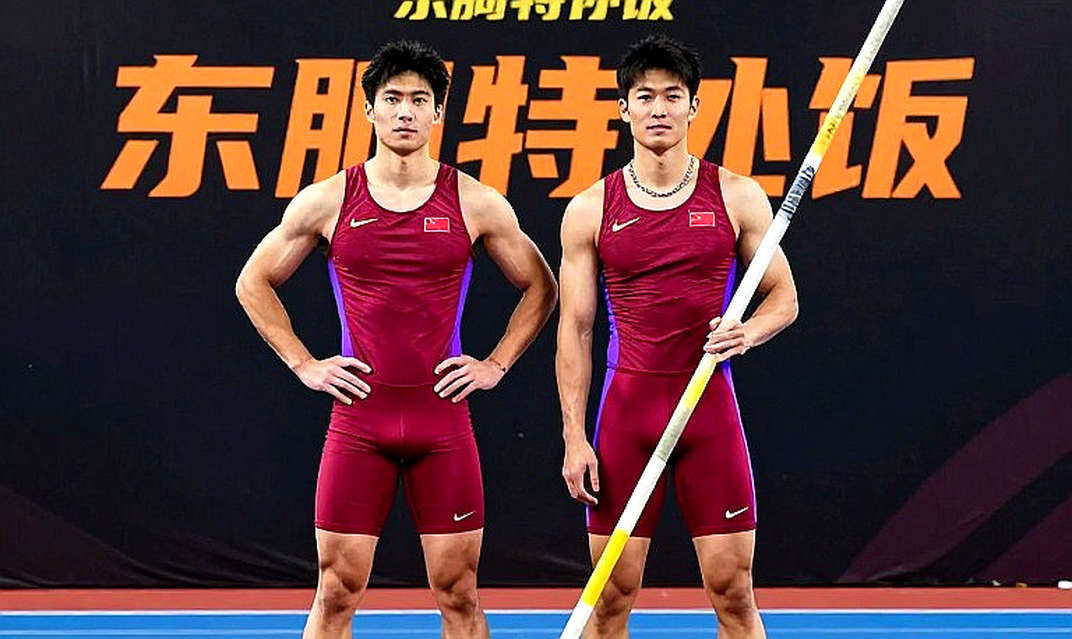
Sample two: Baranica Elangovan, women's pole vault, bronze — 4.15m.
Here the data is complete enough to compute. India's first-ever Asian Games pole vault medal is undeniable as precedent. Numerically, 4.15m sits about 0.91m below the world record (5.06m) and about 0.58m below a Paris-calibre global entry standard.
This is the distinction that matters: national-precedent value and competitive value are not the same thing. A 4.15m clearance would trouble nobody in a global final, but it is a first for India — big in federation history, small in sporting market terms.
The most usable inference here concerns not the athlete but the vacancy in the field. At Hangzhou 2026 the women's pole vault was contested around the 4.60m region. A 4.15m bronze implies the winning height was probably in the 4.30–4.50m band. This result is hard to explain without a down-cycle or absence among Asia's traditional vaulting elite. Confidence: medium. Falsification condition: if the final list shows any of the top three clearing 4.50m, I withdraw the weak-field claim.
Digitising hand-timed records taught me that the question after a first medal is never 'how good are they?' It is 'how good were they?' — a ratchet of expectation measured in time. That question has not yet been written about Elangovan. It will be.
Sample three: Manpreet Kaur, women's shot put, bronze — 17.17m.
Here too the number is complete: roughly 5.5m below the world record (22.63m) and about 1.63m below a global entry standard. _That figure tells us more about the Asian women's shot put field than about Manpreet Kaur's ceiling._ The bronze is a field-depth signal, not an athlete signal.
One methodological caution is essential. Several Indian track-and-field athletes share the name Manpreet Kaur, notably in the throws and in sprinting, and the source offers no disambiguation. No age, personal best or season best is given. Guessing where she sits on an age curve would be fabricating data. My position is fixed: where there is no data, there is a blank cell, not an estimate.
Sample four: Vishal Thennarasu, men's 400m heat winner, plus mixed 4×400m relay silver.
Accelerating through the final 50m to win a heat is a positive shape signal — in a preliminary round. Heat-to-final conversion in the 400m is historically noisy. A controlled first 300m followed by a decisive last 100m is standard heat behaviour; nothing here predicts a final. Load matters more: relay silver the previous day, then individual rounds, then the final. Neuromuscular fatigue accumulates and shows up in the final, not the heat.
The relay silver must be judged separately. Of everything on this sheet, the mixed 4×400m relay silver is the strongest systems signal — four athletes at a coordinated standard, a baton-exchange process, coaching continuity. Relay medals rarely arrive by accident. Individual bronzes can.
Contrarian: 'Historic' Is Written on a National Scale, Not a Sporting One
Now to the place where my own model has to fail in daylight.
This report is framed nationally, not competitively. 'Historic pole vault medal', 'an inspiration to the entire Indian contingent' — every sentence is true, and every sentence is true inside one frame: India's own history. Mapped onto market standards, the two bronzes change character: 4.15m and 17.17m, both below global entry standards, one by 0.58m, the other by 1.63m.
Correlation versus causation is the real question of the day. Are India's two field bronzes evidence of structural capability, or evidence of a favourable entry field? Both explanations fit today's data. Because both fit, my verdict is: until 4.15m becomes 4.40m across two more cycles, I read this as a window of opportunity, not a capability upgrade.
One event from the same day is instructive. India's defending champion men's doubles pair exited badminton in the first round — winning the opening set 21-12, then losing the next two. The source frames it as a potential gold robbed. A pair treated as banked gold became a possibility inside four sets. _That is the model of narrative inversion: the faster a result is called certain, the faster it becomes a forecast._ I put the probability of the same inversion being applied to Elangovan and Gulveer Singh at medium.
A small but sharp observation I filed separately: the report names the shooting coach, Samaresh Jung. It names no athletics coach. Where a coach is named, the reporter had access; where only results appear, the reporter had a results sheet. And a report without coaches permits no judgement about training-system health — only a blank cell.
One thing must be said plainly. Two Bahraini runners coordinating tactically is not a doping story; it is a market story. _It is a transfer-of-allegiance case, fully legal under World Athletics rules subject to a waiting period._ I have spent years working in the transfer market, and I write often that a transfer is a sentence while the market is the grammar nobody wants to teach. The same grammar operates here: one federation imports capability, another tries to answer it with a domestic pipeline. The pipeline is slow; imports are immediate. That reality will cap India's 5,000m, 10,000m and steeplechase ceiling for the coming cycle. On that I hold high confidence.
My own error belongs on the record. Before 2026 my model counted goals, not scarcity. Admitting that publicly built a habit: never trust a valuation until it has been watched failing in daylight. That test has not yet been run on any of these four results, because not one carries a time, a wind reading or a split. A valuation that has never been allowed to lose in daylight is one I do not trust.
Takeaway: The Next Signal
A short list of what to watch, because a blank cell is never a verdict. It is a request.
First, when the 10,000m times are published, Gulveer Singh's silver must be re-priced. Above 28 minutes, the race-shape reading holds and the double-peak achievement holds with it. Below 27 minutes, the question moves from tactics to the clock, and India's distance planning needs a fresh look.
Second, in the women's pole vault, if the Chinese and Central Asian tier returns next cycle, 4.15m will no longer be a bronze. The real test is whether Elangovan is moving toward 4.40m.
Third, the mixed 4×400m relay silver is the most valuable asset of the day, because it belongs to four athletes, not one. I will watch the relay pool separately from the individual 400m final result.
An empty stadium is not silence; it is a control group for noise. The section of the pole vault field nobody occupied on this day is not empty stardom either — it is the angle from which the next cycle's real standard can be read. A Day 6 medal table is a business report. The athletics autopsy starts after the final gun goes quiet, where the narrative stops breathing.