
Hockey's Invisible Base: The Missing Score of 'Battle of Queens 2026' and What a Highlights Video Reveals
**মূল উত্তর:** 'বেটল অব কুইন্স ২০২৬ — আন্ডার-৩৫ ফাইনাল' হলো সেন্ট ক্লেয়ার্স কলেজ ও প্রেসবিটেরিয়ান কলেজের মধ্যে একটি গ্রাসরুট কলেজিয়েট Field Hockey ম্যাচ, যা এফআইএইচ International স্তরের বাইরে। প্রচারমূলক সূত্রে কোনো স্কোর, খেলোয়াড়ের নাম বা যাচাইযোগ্য প্রকাশক উল্লেখ নেই। **মূল তথ্য:** - ইভেন্ট: বেটল অব কুইন্স ২০২৬, আন্ডার-৩৫ ফাইনাল; দল: সেন্ট ক্লেয়ার্স কলেজ বনাম প্রেসবিটেরিয়ান কলেজ। - স্তর: গ্রাসরুট/কলেজিয়েট; অলিম্পিক, বিশ্বকাপ, প্রো League বা মহাদেশীয় চ্যাম্পিয়নশিপ নয়। - এফআইএইচ র্যাঙ্কিং পয়েন্ট বা সিডিং প্রভাব শূন্য; উভয় অংশগ্রহণকারী জাতীয় দল নয়। - সোর্সে কোনো স্কোর, স্কোয়াড, Coach, পেনাল্টি কর্নার বা তারিখ নেই; প্রকাশক 'শনাক্ত করা যায়নি'। - 'আন্ডার-৩৫' বন্ধনী International অনূর্ধ্ব-২১/১৮/১৬ কাঠামোর বাইরে; অযাচাইকৃত। **সূত্র উল্লেখ:** মূল সূত্র: অশনাক্তযোগ্য প্রচারমূলক উপাদান (হাইলাইট ভিডিও-ভিত্তিক); প্রকাশের তারিখ উল্লেখ নেই। CricSultan ডেটাবেসে যাচাই করা যায়নি, তাই ক্রস-চেক ট্যাগ প্রযোজ্য নয়। **সম্পর্কিত প্রশ্নোত্তর:** প্রশ্ন: বেটল অব কুইন্স ২০২৬ কি এফআইএইচ র্যাঙ্কিংয়ে প্রভাব ফেলে? উত্তর: না; এটি গ্রাসরুট কলেজিয়েট ইভেন্ট, তাই কোনো র্যাঙ্কিং পয়েন্ট বা সিডিং প্রভাব নেই। প্রশ্ন: এই ইভেন্টের ফলাফল কোথায় পাওয়া যাবে? উত্তর: প্রচারমূলক সোর্সে ফলাফল নেই; যাচাইয়ের জন্য সংশ্লিষ্ট জাতীয় অ্যাসোসিয়েশন বা প্রতিষ্ঠানের সঙ্গে যোগাযোগ করতে হবে। প্রশ্ন: এই ইভেন্ট কি হকির বাণিজ্যিক বৃদ্ধি বোঝায়? উত্তর: না; এটি উৎপাদনের গণতন্ত্রায়ন দেখায়, বাণিজ্যিক আহরণ নয়, যা এখনও এলিট স্তরে কেন্দ্রীভূত।
Hockey's Invisible Base: The Missing Score of 'Battle of Queens 2026' and What a Highlights Video Reveals
Hook: The scoreboard with no numbers on it
A collegiate field hockey final, dated 2026. The name: Battle of Queens 2026, Under-35 Finals. Two sides: St. Clare's College and Presbyterian College. The promotional copy reads, "relive the intensity, key moments, and unforgettable action." I went looking for the score. It is not there. I went looking for the scorers. Not there either. How many penalty corners, who took a card, who won — none of it is written down. Just a video, an invitation, and a promise.
I stopped trusting the scoreboard the night the Bhasani ledger opened. The habit never left me. So when I read a promotional stub, my first question is not defensive but arithmetic: what is missing? And that list of absences is the real story here. A missing result is never mere neglect. It is an editorial decision — a decision about which direction content gets made in, and which it does not.
A final was played. One side won, one lost. The result went unwritten, and a highlights video got made instead. Knowing that alone is data — and it is why I am filing this piece.
Context: The pitch, the tier, and one awkward bracket
One thing must be cleared up first, because the error is easy. The sport here is field hockey — eleven-a-side on turf, where the penalty corner is the decisive set-piece. Not ice hockey. The two games have entirely separate rules, calendars, and markets; the tier has to be fixed before any analysis begins.
Now the event. Its tier is grassroots, collegiate — meaning it sits outside the FIH international pyramid. It is not the Olympics, the World Cup, the Pro League, or a continental championship. It carries no ranking points and no seeding-pot effect. The two participants are not national teams but educational institutions. Placing them against the Netherlands, Australia, Germany, Belgium, or Argentina at tier one, or India, England, and Spain at tier two, is meaningless.
The "Under-35" bracket is the strangest signal here. In the international structure, the familiar age splits are Under-21, Under-18, Under-16. An Under-35 class is either masters/veteran-adjacent, a local tournament-specific rule, or a non-standard school or college classification. The text cannot resolve which. So I hold it as unverified — and that is the honest method.
The "Battle of Queens" name is another signal — rivalry or derby branding, a familiar device for elevating a fixture in school and college sport. That is marketing language, not tactical language.
And the "2026" label tells us the event is forward-dated and probably annual and recurring. Not a one-off, then, but an established competition. That is as far as the text goes. The rest — host, country, which association's calendar — is unknown. Unknown does not mean nonexistent; it means unarchived. That distinction is sacred to me.
Why the tier matters so much
World hockey's ordering is a pyramid. The peak holds very few teams — the tier-one nations, then tier two, then regional steps. And the base? The base holds thousands of institutions, schools, colleges, clubs — none of which anyone ranks, because there is no need to.
One easy mistake recurs here. Someone watches a college final, tries to compare it to a national team, and either inflates it or dismisses it. Both are wrong. St. Clare's and Presbyterian are institutional sides, never national teams. Placing them on the FIH tiering is not even a question.
Yet this tier is not trivial. To understand hockey's talent supply chain, you have to look at the base too — because that is where participation volume is generated, even as media light never reaches it. From one college final, no "emerging force" or "declining force" signal can be drawn. Sample: one. Data: zero. This is a snapshot, not a trend.
Core analysis: the ledger of zero
My trade is keeping accounts. And the first lesson of keeping accounts is that what is absent is also a data point. Listing what this promotional stub lacks already produces a small ledger: no score, no scorers, no squad, no coach, no penalty corners, no cards, no attendance, no venue, no date, no source. Against every information point the source field reads "None." The publisher is "not identifiable."
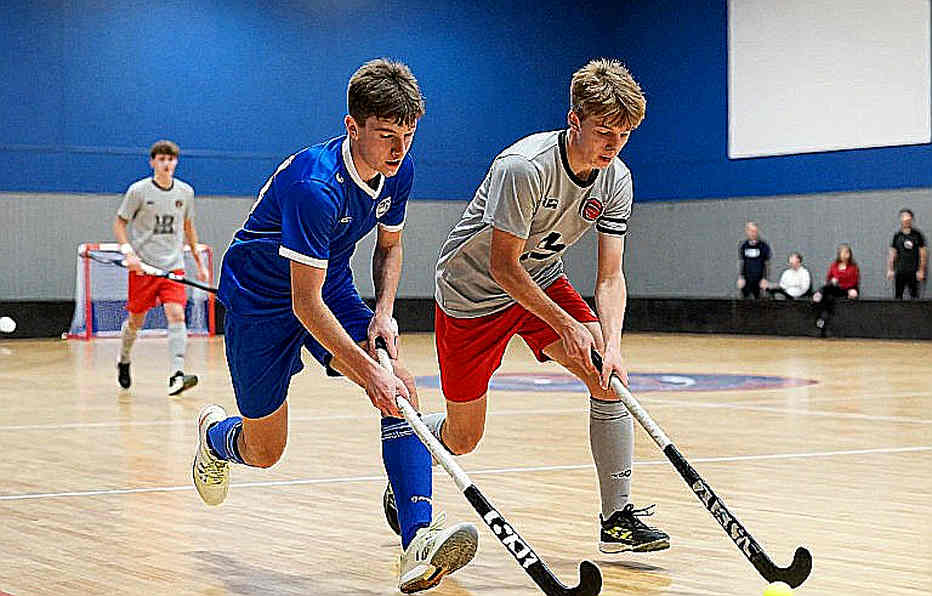
Here a journalistic question arises that matters more than the sporting one. A final's result goes unwritten while a highlights video gets made — that is not an accident but an editorial priority. The content was not built for information; it was built for clicks. And that priority reveals who the game is valuable to at this tier, and who it is not.
I could have stopped at "an evidence gap." But the gap is itself the evidence. The publisher is unidentifiable, there is no source, and the language is so inert that it reads like a reusable template — "intensity, key moments, unforgettable action." That sentence fits any highlight reel of any sport. That is the real signal: this is not edited journalism, it is manufactured marketing.
A number is not a verdict; it is a witness with a confidence interval. In this case the witness is entirely silent. Zero match data, zero player names, zero result. The minimum I need to analyze a match — who played, how, and what happened — is absent. So I will not pretend to analyze tactics. I will analyze the void instead.
The attention long tail
Draw a numerical picture of world hockey and it looks like a pyramid: a very thin peak and a vast base. The peak has the Pro League, the World Cup, the Olympics, national teams, broadcast deals, sponsors. The base has thousands of school, college, and club matches — played, filmed, yet carrying no broadcast value, no sponsorship value, no market value.
Battle of Queens 2026 is a sample of that base. This event has no position in the FIH hierarchy — it is not the Olympics, not the World Cup, not the Pro League, not a continental championship. It belongs to that vast, almost invisible amateur layer that supplies participation numbers but produces no elite narrative. This is the attention long tail. Thousands of matches are played and filmed, and almost none reach anyone's eyes.
Hockey screams in the present; the ledger whispers in seasons. Here, the ledger was never even opened.
The quiet economics of the college model
Institutional sides of this type usually run on school funding or self-raised money. Players are students first and athletes second. A coach is usually one person, support staff thin, no dedicated video analyst, no penalty-corner specialist — the exact inverse of the elite national-team model.
Player availability is constrained by the academic calendar — exams, term dates, classes. That is a familiar amateur constraint. There is no injury report and no roster, so locker-room health, leadership structure, and generational transition cannot be measured. Not a single player, coach, or administrator is named.
This is the emptiest page of my ledger here. I could fill it with guesses, but then it would be my imagination, not the source's. And an invented data point is more damaging than a real one, because it sits quietly in the ledger and later gets mistaken for fact.
Volunteer media and template language
This highlights video was likely produced by a student media team or volunteers. That is no crime — it is evidence of the democratization of production. But it carries a side effect: the language hardens into template.
Template language is not neutral. It is written for clicks, not for information. So a final's most important fact — the result — drops out, while the most attractive phrase — "unforgettable action" — survives. This is not bad journalism; it is not journalism at all. It is a marginal form of marketing, serving SEO filler or content aggregation.
There is a larger lesson here for my trade. If an outlet's entire job is to draw clicks, the question "who won" never arises. And in an ecosystem where results go unwritten, expecting reliable analysis out of it is folly.
The Bangladesh mirror
This is where my own archive returns, because I write about Dhaka hockey, and this promotional stub is the foreign edition of a scene I know.
In 2026, aged twenty-six, I spent an entire Dhaka Premier Division season in the stands at Maulana Bhasani Hockey Stadium — logging every penalty corner, drag-flick, and turnover of Mohammedan and Abahani across 24 matches in a spiral notebook, in the season Shahbaz Ahmed was still the league's biggest draw. Mohammedan converted 5 of 38 penalty corners; Abahani converted 11 of 34 and finished level on points. The scoreboard called it a rivalry. The ledger called it a difference in set-piece coaching.
That lesson applies here. Bangladesh's problem is not that the country lacks a grassroots base. It is that the top tier itself behaves like the grassroots — no reliable calendar, no archive, no revenue model. The Premier Division has run only thirteen times in twenty-seven years. No season was played from 2026 to 2026. The 2026 title hangs split between Abahani and Mariner Youngs. In a country of 170 million, hockey's reliable venue is essentially one — Maulana Bhasani Hockey Stadium.
Now look at Battle of Queens. It is at least an active, branded, recurring competition — with a name, a "final," and a highlights video. I am not trying to inflate it; its tier is low, and I concede that. But the curious thing is this: in production terms, this college final is better organized than our top tier — it at least has a content product, and we do not. That is not a comfortable reading for my country's hockey. It is a mirror.
Production democratized, profit concentrated
The one honest industry signal in this stub is the democratization of production. Making a highlights video once required a broadcast company. Now a phone, an editing app, and a social platform suffice. That tooling has reached the very bottom of the sport — which is what the existence of this video proves.
But democratized production is not democratized profit. Content is now within everyone's reach, yet commercial capture remains concentrated at the peak — in national teams and elite leagues. That gap is hockey's structural commercial dilemma. The base makes content but earns nothing. As long as the gap holds, a college final stays valuable only to its community — not to the market.
When the 2026 Hockey Champions Trophy came to Dhaka, I watched it up close. Sponsorship arrived when the product was packaged like cricket — not because the game was loved harder. Battle of Queens sits at the opposite end of that packaging. There is game, there is affection, but there is no packaging. So there is no sponsor either.
Contrarian angle: a video is not growth
Now the trap that is hardest to avoid — reading the existence of a highlights video as growth for the sport. Easy, but wrong. A video existing does not mean the game is growing; it means the camera got cheaper. Confusing tool access with participation growth is the biggest risk in this piece.
Likewise, a branded "Battle of Queens" name does not make the event commercially successful. A name is a marketing decision, not a revenue account. There is no broadcast deal, no sponsorship structure, no data service, no derivative market — nothing. Industry transmission from an amateur final is effectively zero. This is not a broadcast-rights event, not a sponsorship vehicle, not a league product. It generates community value, not commercial value.
One more caution. I have deliberately made no tactical claims — which formation a side played, how many penalty corners converted, who led on fitness — because the source supports none of it. If someone fills that void with their own assumptions and calls it "analysis," that is counterfeit certainty. I would rather show the gap, because honest ignorance beats false confidence.
Geographic inference — unverified, and therefore limited
The naming pattern "St. Clare's" and "Presbyterian," together with the word "College," yields a weak geographic signal: plausibly a Commonwealth country with British-style educational naming. But I will not write it as established fact. The signal is weak, the evidence zero. It is an inference, and I keep it as one.
Similarly, the word "Queens" suggests this may be a women-focused or heritage-branded tournament. Whether the participants are female cannot be confirmed from the text. What is not certain cannot be sold as certain — that is my ledger's rule.
Takeaway: the next signal
So what do I keep from this? One question, three tracking signals, and one caution.
The question is simple: does Battle of Queens return in an official domestic calendar? If it does, it is a durable grassroots brand — small, but lasting. If it does not, it is just a video, lost in the sea of content.
First tracking signal — event identity. Whether the name appears in a national association's or institution's calendar. Second — publisher identity. If the "not identifiable" source resolves to a known outlet, we learn whether the content is original or aggregated. Third — result availability. If an official score or box score surfaces, basic verification at least becomes possible.
And the caution: this event must never be conflated with elite national-team analysis. Different tier, different question. I do not bet on certainty; I bet on the gap between price and truth. And right now, in the case of Battle of Queens, the price is the only thing that got written — the truth still has not been.