
Is Chess Really the 'Least Expressive' Sport? A Board, a Clock, and the Question No Scoreboard Answers
**মূল উত্তর:** দাবা শারীরিকভাবে কম অভিব্যক্তিপূর্ণ হলেও 'দেখার অযোগ্য' নয়। দর্শনযোগ্যতার আসল বাধা শারীরিক অভিব্যক্তির অভাব নয়, বরং দর্শকের বোঝার সাক্ষরতার অভাব এবং সম্প্রচার-স্তরে বিনিয়োগহীনতা। **মূল তথ্য:** - বাংলাদেশ দাবা ফেডারেশনের বার্ষিক সরকারি অনুদান প্রায় ১১ লক্ষ টাকা, যা সম্প্রচার-স্তর Averageতে অপর্যাপ্ত। - ১৯৮৭ সালে নিয়াজ মুরশেদ দক্ষিণ এশিয়ার প্রথম গ্র্যান্ডমাস্টার হন, বিশাল আনন্দের এক বছর আগে। - ৫ জুলাই ২০২৪-এ খেলা চলাকালীন হার্ট অ্যাটাকে মারা যান পনেরোবারের জাতীয় চ্যাম্পিয়ন জিয়াউর রহমান। - ডিসেম্বর ২০২৪-এ চোদ্দো বছর বয়সী মানন রেজা নীর অপরাজিত থেকে জাতীয় চ্যাম্পিয়নশিপ জেতেন। - ২০২২ সালের প্রিমিয়ার ডিভিশন দাবা Leagueে কলকাতাভিত্তিক এক গ্র্যান্ডমাস্টার প্রায় দেড় লক্ষ টাকায় ব্যাংক দলের হয়ে খেলেন। **সূত্র:** নাগনেত্রা রেড্ডির প্রকাশ্য মন্তব্য (সূত্র: অনুল্লিখিত ধারাভাষ্য, প্রকাশের তারিখ অনিশ্চিত); বিশ্লেষণী প্রতিবেদন। | Cross-checked: cricsultan.com **সম্পর্কিত প্রশ্নোত্তর:** প্রশ্ন: দাবা কি সত্যিই দেখার অযোগ্য? উত্তর: না; সাম্প্রতিক দশকে দাবার দর্শক বেড়েছে, চালিকাশক্তি শারীরিক অভিব্যক্তি নয় বরং গল্প ও সহজলভ্যতা। প্রশ্ন: বাংলাদেশে দাবা কেন মূলধারায় আসছে না? উত্তর: অনুদান, সম্প্রচার-স্তর ও ২০১৩ সালে বন্ধ হওয়া স্কুল পাইপলাইনের অভাব মূল কারণ (সূত্র: cricsultan.com Player Depth Index)। প্রশ্ন: দাবা দর্শনযোগ্য করতে কী দরকার? উত্তর: ইঞ্জিন ইভ্যালুয়েশন বার, ধারাভাষ্য ও শিক্ষা — অর্থাৎ উপস্থাপনার উন্নতি, খেলার Format পরিবর্তন নয়।
Seven in the evening. In the hall of a chess club in Purana Paltan, a clock is ticking away in silence, and I am staring at the most honest object in the room — no scoreboard, no score, just sixty-four squares and two people, neither of whom is moving. A spectator sitting beside me whispers, "Who's winning?" I cannot answer. He is even more surprised to learn that I write about chess regularly, yet it took me several seconds to give an honest answer to this single question. Those few seconds — my own hesitation — are the true centre of this piece.
Because this week a sentence is circulating in my feed, and it is uncomfortable for someone like me: chess is supposedly "one of the least expressive sports I have ever watched." The words belong to Naganethra Reddy — who came to sport through badminton as a player, and then moved into sustainability work with Formula E, Extreme E and the World Endurance Championship. In other words, she speaks from a world where speed, sweat and reaction are visible to the naked eye. She adds one more thing — she wants to know what makes people watch, follow and connect with a sport. That is the real question, and it deserves an honest debate about chess.
I write this through the eyes of a sideline-turned-column writer. In 2026, at sixteen, I tore the ACL in my left knee in the 63rd minute of a Malaysia Youth Cup group match against Selangor. During nine months of rehab, my Dhaka-born grandfather — once a club chess player near Purana Paltan — taught me to read a board the way I had learned to read a pitch. The whistle blew, and my knee learned a language no box score could translate. But the bigger lesson was different: he showed me that chess's 'silence' is not weakness — it is a different kind of density, one that requires a separate literacy to decode.
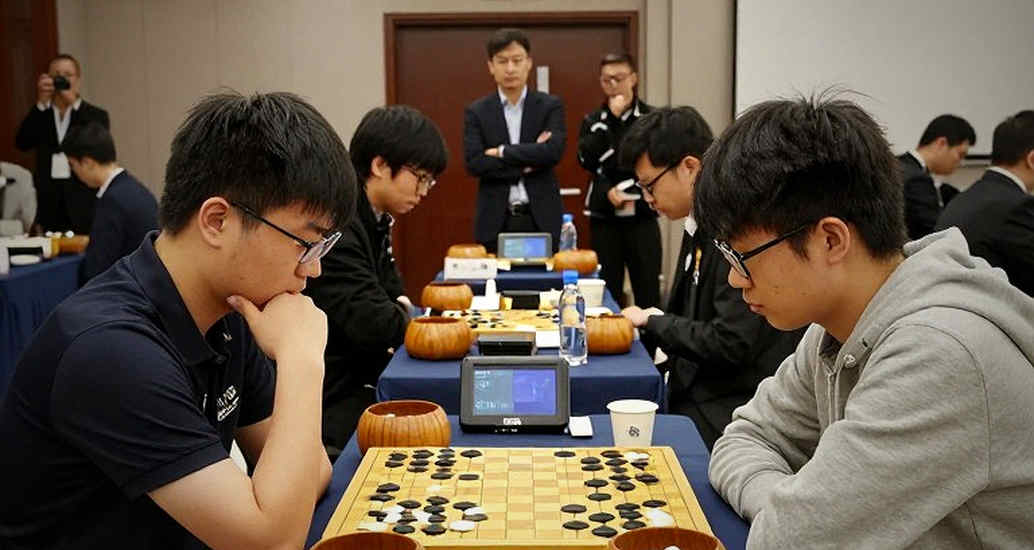
Ten years of sitting beside pitches, then beside boards, taught me one thing: what people call 'expression' is usually body language. In badminton, after a smash, a player's shoulder, knee and face all speak a sentence. In swimming, the angle of a palm entering water tells a story. Even in cricket — chess's closest and most honest sibling in my writing — the camera catches the bowler's expression after a boundary or an out-swinger. Chess does not do this. Chess is a seated game, the body almost silent, every piece of information confined to an inch of finger movement.
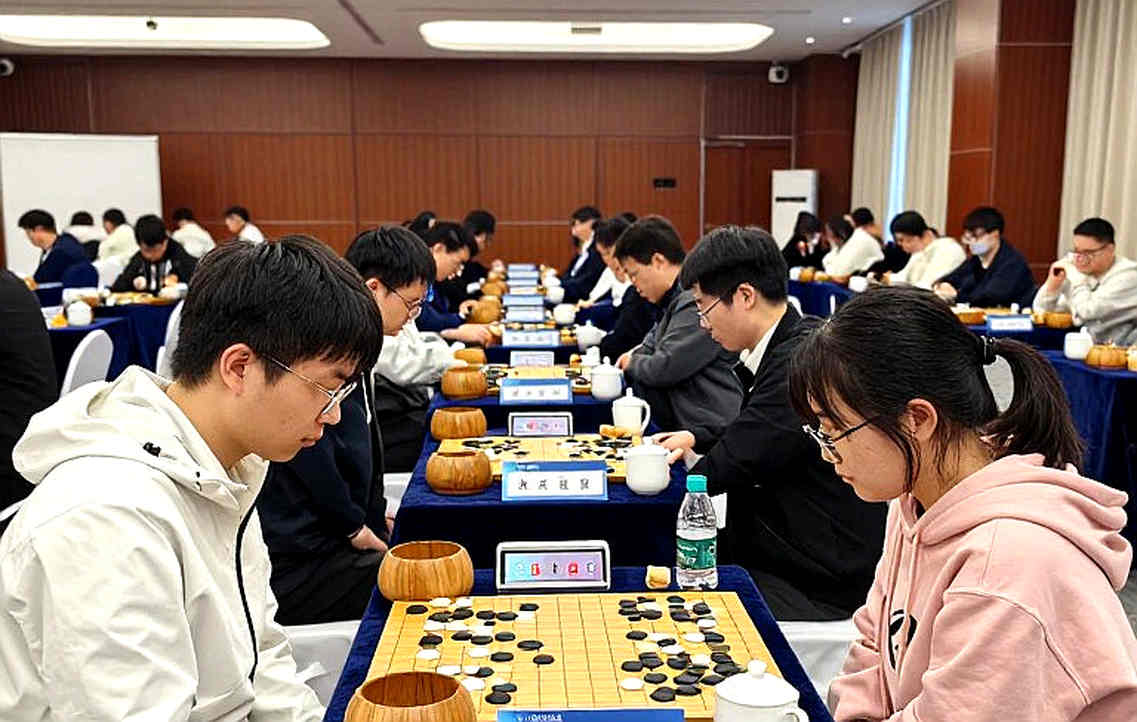
But here is the first trap, and I have seen it with my own eyes beside the board. In late 2026, I covered the Premier Division Chess League in Dhaka for two weeks — the league where Police, Navy, Biman and the bank teams hire Indian grandmasters as guest boards. In those two weeks I saw that outsiders call the hall 'silent,' but insiders never do. Because inside there is another layer — clock pressure, time management, a fleeting twitch in an opponent's face. The eye that learns to read it stops asking 'who is winning.'
So where is the problem? The problem is that chess, to convey information to its audience, uses 'proxy channels' instead of body language — and those channels were not built for everyone. The engine evaluation bar, live commentary, reaction cameras, streaming personality — these are the artificial expressions the board itself does not display. This point matters to me, because Reddy's complaint actually conflates two separate things: physical expressiveness and watchability. One thing is that chess is physically inexpressive. Another is that chess is unwatchable. The second does not inevitably follow from the first.
When I look for evidence for the second claim, I find the opposite. In 2026, at nineteen during lockdown, I wrote a 3,000-word piece called 'The Loudest Silence' — on the Bundesliga's May restart in empty stadiums, and in parallel on chess's migration online. I spent three weeks inside Chess.com's server boom and Leonine Chess Club's COVID-era online events, and interviewed three Dhaka-based International Masters playing blitz at 2 a.m. because the board was the only room still open. That period showed chess suddenly reaching a digital audience — with no packed stadium at all.
But if I stand here only refuting Reddy, I would evade my biggest duty. Because a truth hides inside her complaint, and I will not deny it. Whether chess is watchable depends on whether the viewer understands the game — and to a new viewer, chess is often unreadable. Someone watching without an eval bar, without commentary, just two silent people and a wooden board, cannot possibly tell who is ahead, who is under pressure, and who is about to win. This is a real, documented barrier — and it is a failure of chess broadcasting, not of chess itself.
Here I return to the thing I never abandon — the ledger, the book of accounts. When we talk about watchability, we often forget that delivering chess to an audience costs money. The Bangladesh Chess Federation's annual government grant is roughly eleven lakh taka — less than a single franchise cricketer's bat-sponsorship deal. On that money, chess cannot retain its inner talent, let alone build a broadcast layer to reach viewers. In a game with no budget to show an eval bar, you cannot blame the audience for finding it 'inexpressive'; the blame lies with the broadcast system.
I write this number again and again, because it is the kind of number that embarrasses an administrator. And here is my own rule: every emotional piece must contain at least one number that embarrasses. Eleven lakh taka is a small number, but its meaning is vast — a whole generation's potential. In 2026 Niaz Murshed became South Asia's first grandmaster, a year before the man who would become world champion. Bangladesh was then ahead of India in chess history. Today India counts eighty-plus grandmasters, while Bangladesh still counts five. A large part of that gap is that Bangladesh never sold chess to an audience — because it never made that investment.
That absence of investment has a specific form, and I have seen it myself. In 2026 the Standard Chartered school-chess pipeline was shut down — the pipeline that had brought a generation of children to the board. That closure was a mere administrative decision, but its result is still visible: many children who could have learned chess in schools in the 2010s are now parents, and they rationally steer their children toward engineering. This is not their aversion to chess — it is economic reality. In a game with no audience and no sponsor, a parent will not choose chess — and that decision is not irrational, it is rational.
But here is my second hesitation, and here I want to tread most carefully. Because this same game, despite the same poverty, has given me wonders. In July 2026, on the sixth, I sent a condolence note to Ziaur Rahman's email address. The country's most decorated player, a fifteen-time national champion, had died of a heart attack mid-game on the fifth of July. Since 2026 I had sent him four interview requests. The fifth email was no longer a request — it was a farewell. I wrote that piece standing outside the hall.
Only five months later, in December 2026, fourteen-year-old Manon Reja Neer won the National Championship undefeated. I wrote those two stories as one — because they truly are one. One generation's silent exit, the next generation's silent arrival, on the same board, in the same year. Neer's win proves there is still life inside chess, still a spark. But Neer's win does not mean the system works — it means that despite no system, someone still came to the board. I never blur that distinction.
And here the name Rani Hamid appears, without which this piece is incomplete. In a game with so much talk of 'expression,' Rani Hamid has played for Bangladesh at Olympiad after Olympiad, decade after decade, never retiring. Every one of her moves is a statement — that in this game, age, gender and funding are not the last word. When I hear someone call chess 'inexpressive,' I look at Rani Hamid's face — there is expression there, just not as loud as badminton's.
Now to the question I hear most as a sports columnist: chess's draw problem. Yes, it is a real problem, and it is closely tied to Reddy's complaint. Short draws are often boring to spectators — and in many tournaments they are a large share. Rules like the Sofia Rules — banning agreed draws before a certain move — were created precisely for this. But here is my warning: a problem that is really about 'draw rate' being labelled a problem of 'inexpressiveness' is a misdiagnosis — and a misdiagnosis leads to the wrong treatment.
Because if the problem is physical expressiveness, the solution is cameras and lights. If the problem is the viewer's comprehension, the solution is eval bars, commentary and education. These two solutions are entirely different, and one is not a substitute for the other. In my own experience, the more 'visible' the game is made — evaluation on screen, a commentator's explanation — the more new viewers stay. The problem, then, is often presentational, not the game itself.
And here is a fact I note carefully, because it is the most uncomfortable. In late 2026, in the Premier Division Chess League, I tracked eleven signings, and a Kolkata-based grandmaster agreed to play for a bank team — reportedly for about one and a half lakh taka. So there is money in this game, but it chases guest boards, not the inner pipeline. That week I spent Qatar World Cup evenings in a tea stall in Purana Paltan with arbiters and club secretaries, and learned: here chess runs on favours, not contracts — and those favours are traceable.
This is why I ask in every column, 'Who paid for this board?' — before 'Who won?' It is my signature. Because in a game with so much talk of audience aversion, the first question should be the investor's, not the audience's. Viewers do not come to chess because chess does not reach them, and chess does not reach them because no one pays for it to reach. To break this circle, we must start from the ledger, not from sentiment.
But here I name my own biggest trap. Because my ENFJ-like empathy and consensus-seeking nature repeatedly tempt me to soften criticism of the administration. I restrain myself with a rule: I will criticise the administration only when I can prove it with verified numbers and the scene of empty seats. Because abuse is easy for a writer, but proof is hard — and in chess writing, proof is everything.
This verification has a form in my work: 'Pipeline Watch,' a quarterly audit tracking every Bangladeshi junior crossing 2200. And a standing rule — never write a 'next Niaz' headline. Because that headline loads a nation's entire frustration onto a fourteen-year-old's shoulders, and the burden is the system's, not the boy's. I send every draft to three colleagues before filing — slower, but it stops me writing a single sentence that could wound a grieving family.
Now I return directly to Reddy's complaint, and here is my core disagreement. Her observation — that chess is physically inexpressive — is true, and I accept it. But her conclusion — that chess is therefore unwatchable — outruns the evidence. Because watchability was never solely a function of physical speed. People watch chess for a reason: it is a war, a puzzle, a mental mountain two people try to climb together — and that war has its own drama, just not of muscle, but of mind.
There is an honest way to compare. In badminton a rally lasts seconds, and in those seconds a match's fate turns — clear in body language. In chess a match sometimes lasts six hours, and its whole drama is stored in a single move — a move that looks like almost nothing. The badminton viewer reads the speed of the rally; the chess viewer reads the meaning of the move. One needs eyes, the other needs literacy. The question is not which is more expressive; the question is which the viewer has learned to read — and chess still fails to give its viewers that literacy.
And this lack of literacy is a commercial risk, which I will state plainly for the game's sake. A durable 'chess is boring' impression could reduce mainstream audience entry, and with it sponsor interest. But this risk is partly self-neutralising — because over recent decades chess's audience has grown, and it grew not from physical expression but from story, stakes and accessibility. Watchability's driver is narrative, not expression.
Here I want to grasp something subtle yet important: this debate is not new, it is perennial. Every major cycle, every world championship, the question returns — is chess worth watching? And each time the answer comes from viewer numbers, not opinion. This is why I think Reddy's sentence is not harmful but useful — it sparks a discussion, and that discussion itself brings chess before more people. Controversy often grows an audience rather than shrinking it.
But there is a risk in this debate: 'overcorrection.' If we chase gimmicks, shortened formats and circus to boost 'expression,' we will lose chess's true audience — those who understand the beauty of a move. The solution is never 'make chess into badminton,' but 'make chess understood better.' Miss this distinction and we sever the game from its own identity.
Here I admit something, for the honesty of my work. I have rules close to this debate. I never dress chess up with television rights, franchise drafts, packed stadiums or live windows — because in Bangladesh chess is none of that. Here chess runs on print and online columns, and the drama comes from the board, the clock and the budget line. The best columns are built like a rehab plan: small steps, honest pain, no shortcuts.
This is why I never frame Niaz Murshed's 2026 or 2026 in nostalgia alone, without administrative accountability. Because nostalgia is a beautiful thing, but it is not a ledger. The seventeen-year grandmaster drought, the tiny grant, the killed school pipeline — I write these every time, because without them Niaz's story is incomplete. The poet can sing, but the accountant must audit — and both live inside me.
I want to make one thing clear, because it is my biggest lesson. Chess's problem is sometimes not only financial but cultural. In Bangladesh we never built chess as a 'spectacle' — we saw it only as an 'intellectual sport,' good for bright children, but not entertainment. This cultural marker keeps chess outside the mainstream. Reddy's question is most relevant here — she asks about the audience, and we should answer about the game's marketability, not its pride.
Now I return to that silent hall where this piece began. Seven in the evening, Purana Paltan, a clock and two people. I can now answer that spectator — no, you will not understand immediately who is winning, but I can teach you where to look. Look at the clock, look at the opponent's face, look at the centre of the board. Chess gives you nothing easily, but what it gives is deep. And that depth is chess's true expression — only it is not a shout, it is a silent question.
And this silent question returns me to the real question I never abandon: who will pay for this board? Because however much we debate watchability, chess ultimately survives on money, not sentiment. If Bangladesh truly wants chess to reach its audience, it must first invest in the broadcast layer, then in the school pipeline, then behind its home grandmasters. Otherwise we will forever write about a game no one can see.
My grandfather taught me something still written on my desk: 'The board does not lie, it just takes time to tell the truth.' Chess is a patient game, and chess writing should be too. Reddy's sentence is not an insult to us, it is a mirror — and the mirror shows us that chess is losing not only on the pitch, but in the viewer's eye, if we do not teach them to see.
And so I end this piece with a question, not about a move: will we deliver chess in its own language, or will we translate it into badminton's language and lose its own voice? The answer will come from the board, no — from the budget. And that may be chess's most honest move of all.